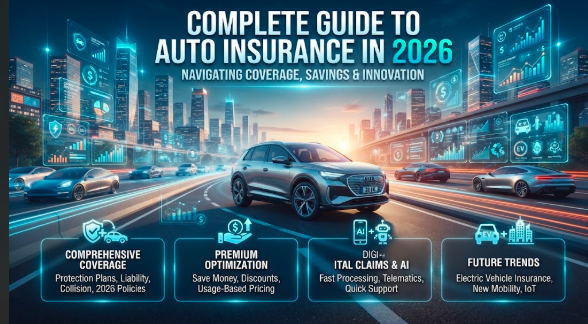
Auto insurance is one of those things most Americans think about only twice a year when the renewal bill arrives and when something goes wrong on the road. In 2026, that approach is becoming increasingly expensive, as the insurance landscape has shifted in ways that are catching drivers off guard.
Premium rates stabilized modestly after the sharp increases of 2023–2024, but they remain historically high in most states. Repair costs are still elevated due to vehicle complexity, parts shortages in some regions, and the prevalence of advanced driver-assistance systems (ADAS) that are expensive to recalibrate after even minor collisions. Meanwhile, new coverage categories tied to electric vehicles, telematics, and autonomous features are reshaping what “full coverage” even means.
This guide is written for U.S. drivers who want to make smarter decisions about their auto insurance — whether you’re buying your first policy, reassessing coverage at renewal, shopping after a major life change, or simply trying to understand a bill that feels too high. You don’t need a background in finance or insurance to benefit from what’s here. What you do need is a willingness to spend 20 minutes understanding a product you’ll likely pay for every year of your driving life.
By the end of this guide, you’ll know how auto insurance works, what every major coverage type actually protects, what’s driving your premium, and how to shop, compare, and choose a policy with real confidence.
Internal Link Opportunity: See our state-by-state minimum coverage requirements guide →
Understanding the Basics
What Auto Insurance Is (and What It Isn’t)
Auto insurance is a contractual agreement between you and an insurance company. You pay a premium — either monthly, semi-annually, or annually — and in exchange, the insurer agrees to cover certain financial losses arising from accidents, theft, weather damage, or other covered events, up to the limits defined in your policy.
It is not a warranty on your vehicle. It doesn’t cover routine maintenance, mechanical breakdowns (unless you add a separate mechanical breakdown rider), or modifications you make without notifying your insurer. And it doesn’t always cover the full value of your vehicle — a distinction that matters enormously when you’re filing a claim and expecting a check.
How Auto Insurance Actually Works
When you purchase a policy, you choose a set of coverages, each with its own coverage limit (the maximum the insurer will pay) and, in most cases, a deductible (what you pay out of pocket before your insurance kicks in).
Say you carry collision coverage with a $1,000 deductible and a $50,000 limit, and you back into a pole and cause $4,500 in damage. You pay $1,000; your insurer pays $3,500. If the damage were only $800 — less than your deductible — you’d pay the entire amount yourself.
When you file a claim, an adjuster (either an employee or a contracted independent) evaluates the damage, determines the covered amount, and processes payment — either to you, to a repair shop directly, or to the other party in a liability claim.
Key Terminology You Need to Know
Understanding these terms will help you decode any policy document you encounter:
Premium — The amount you pay for your insurance policy, typically billed monthly or every six months.
Deductible — The amount you pay out of pocket on a claim before your insurer pays the remainder. Higher deductibles mean lower premiums.
Coverage limit — The maximum your insurer will pay per claim or per policy period. Expressed as either a single number (e.g., $100,000) or a split (e.g., 100/300/100 for bodily injury per person/per accident/property damage).
Liability — Coverage that pays for harm you cause to others — their injuries or property damage. This is what’s legally required in most states.
At-fault vs. no-fault — In at-fault states, the driver who caused the accident is responsible for damages. In no-fault states, each driver’s own insurance pays for their injuries regardless of fault, and your ability to sue is restricted.
Actual Cash Value (ACV) — What your insurer pays for a totaled vehicle: its market value at the time of the loss, after depreciation. Not the same as what you paid for it or what it would cost to replace it.
Replacement Cost Value (RCV) — What it would cost to replace the vehicle with a comparable new or like-kind model, without depreciation. Available on some policies at higher premiums.
GAP insurance — Covers the difference between what you owe on a car loan and what the vehicle is actually worth (ACV) if it’s totaled. Critical for leased or recently financed vehicles.
Endorsement — An addition or modification to a standard policy, sometimes called a rider.
Exclusion — A situation or condition specifically not covered by your policy.
Types and Coverage Options
Auto insurance is not a single product. It’s a bundle of distinct coverages, and understanding each one separately is the key to building a policy that actually protects you — without paying for things you don’t need.
Liability Coverage
Liability is the foundation of every auto policy and is legally required in 49 states (New Hampshire allows drivers to post a financial bond instead). It covers damages you cause to other people and their property.
Bodily injury liability (BI) pays for medical bills, lost wages, pain and suffering, and legal defense costs if you injure someone in an accident.
Property damage liability (PD) covers damage you cause to someone else’s vehicle, fence, building, or other property.
Liability is written as a split limit (e.g., 100/300/100) or a combined single limit (e.g., $300,000 CSL). Split limits define per-person and per-accident maximums separately. A CSL applies a single pool to all damages in a claim.
State minimums are dangerously low in most cases — often $25,000/$50,000/$25,000 or less. Given that a single serious injury can easily generate six-figure medical bills, most financial advisors recommend at least 100/300/100 and ideally an umbrella policy on top of that.
Expert Tip: Your liability limit should be at least equal to your net worth. If you’re sued and your coverage is exhausted, your personal assets — savings, investments, home equity — can be targeted.
Collision Coverage
Collision pays for damage to your own vehicle when it collides with another car, a guardrail, a tree, or any other object. It applies regardless of fault.
Collision is not required by law, but most lenders and lease agreements require it until the vehicle is paid off. It comes with a deductible (typically $250–$2,500) that you choose when you set up the policy.
Whether collision is worth keeping on an older, paid-off vehicle depends on a simple calculation: if the annual premium plus your deductible exceeds the car’s current market value, you’re likely paying for coverage you’d rarely collect on. Many experts suggest dropping collision when a vehicle’s value falls below $4,000–$5,000, though that threshold varies by your financial situation.
Comprehensive Coverage
Despite its name, comprehensive doesn’t cover everything — it covers damage to your vehicle from non-collision causes: theft, vandalism, fire, floods, hail, falling objects (including trees), and animal strikes. If a deer runs into your car, that’s a comprehensive claim. If you swerve to avoid the deer and hit a ditch, that’s collision.
Comprehensive also comes with a deductible, though many drivers choose a lower deductible here ($100–$500) because comprehensive claims tend to be larger and less frequent. Like collision, it’s typically required by lenders.
Uninsured and Underinsured Motorist Coverage (UM/UIM)
About one in eight U.S. drivers is uninsured, according to Insurance Research Council estimates. Many more carry only state minimum liability limits — which may not cover the full cost of injuries they cause.
Uninsured motorist (UM) coverage pays your medical bills, lost wages, and sometimes vehicle damage when the at-fault driver has no insurance.
Underinsured motorist (UIM) kicks in when the at-fault driver has insurance, but their limits are too low to cover your losses.
UM/UIM is required in roughly half of U.S. states and strongly recommended everywhere. It’s relatively inexpensive — often $20–$50 per six-month period — for meaningful protection.
Medical Payments (MedPay) and Personal Injury Protection (PIP)
MedPay covers medical and funeral expenses for you and your passengers after an accident, regardless of fault and regardless of health insurance. It’s available in most states and relatively affordable.
PIP (Personal Injury Protection) is a more comprehensive version, available or required in no-fault states. PIP covers medical expenses, lost wages, rehabilitation costs, and sometimes childcare or household services if you’re incapacitated. In no-fault states, PIP is often the first-dollar coverage before any liability claims come into play.
Gap Insurance
If your car is totaled and you owe more on your loan than the car’s current market value, you’re responsible for the difference — and that gap can easily be $3,000–$10,000 or more on a recently financed vehicle. GAP insurance covers exactly that difference.
GAP is especially important for drivers who put little or no money down, chose a long loan term (72 or 84 months), or are leasing. Dealers often sell GAP at a marked-up price; buying it through your insurance carrier is almost always cheaper.
Rental Reimbursement Coverage
Pays for a rental car while your vehicle is being repaired after a covered claim. Typically costs $5–$15 per six-month period and reimburses $30–$50 per day up to a specified total. If your job or daily life depends on having a vehicle, this coverage is worth its modest cost.
Roadside Assistance Coverage
Covers towing, jump-starts, flat tire changes, lockout service, and fuel delivery. Available through auto insurers, but also through AAA, credit cards, and vehicle manufacturer programs — compare costs before adding it to your policy.
New Car Replacement Coverage
If your new vehicle is totaled within the first year or two of ownership, standard comprehensive and collision would pay only ACV (actual cash value), which accounts for depreciation. New car replacement coverage pays for a brand-new equivalent vehicle instead. Worth considering for the first 12–24 months of ownership.
Rideshare Coverage
If you drive for Uber, Lyft, or a similar platform, your personal auto policy likely doesn’t cover you while the rideshare app is active — even during the period when you’re waiting for a ride request. Rideshare endorsements fill this gap. Most major insurers now offer this as an affordable add-on.
Coverage Comparison Table
Coverage TypeWhat It CoversRequired?Who Needs ItLiability (BI/PD)Injuries/damage you cause to othersYes (most states)All driversCollisionYour vehicle in a collisionLender/lease requiredFinanced vehicles; newer carsComprehensiveTheft, weather, animals, fireLender/lease requiredMost vehicles; high-theft areasUM/UIMYour losses if hit by uninsured driverRequired in ~half of statesAll driversMedPayMedical expenses for you/passengersVaries by stateAll driversPIPMedical, lost wages (no-fault states)Required in no-fault statesAll drivers in no-fault statesGAPLoan/lease balance above ACVNoFinanced/leased vehiclesRental ReimbursementRental car during repairsNoDrivers without backup transportRideshare EndorsementCoverage while app is activeNoRideshare drivers
Costs and Pricing Factors
What Drives Your Premium
Auto insurance pricing is actuarial — insurers use historical data to predict how likely you are to file a claim and how costly that claim will likely be. Every factor they use is a proxy for risk.
Driving record — Your single biggest rating factor. A clean record earns the best rates; a DUI can double or triple your premium and keep it elevated for five to seven years.
Age and experience — Teen drivers (16–19) pay the highest rates because they have the highest crash rates. Premiums generally decline through your 20s and stabilize in your 30s–60s, then may rise modestly past 75.
Location — Your ZIP code matters as much as your driving record in some cases. Urban areas with heavy traffic, higher crime, and more frequent severe weather carry higher premiums. Moving even a few miles can change your rate meaningfully.
Vehicle type — Insurers look at repair costs, theft rates, safety ratings, and engine size. Luxury vehicles, sports cars, and EVs with expensive battery systems typically cost more to insure. Vehicles with strong safety records and low repair costs are cheaper.
Coverage selections and deductibles — More coverage and lower deductibles mean higher premiums. This is one area where you have direct control.
Credit-based insurance score — In most states (not California, Hawaii, Massachusetts, or Michigan), insurers use a version of your credit history to predict claim likelihood. Drivers with poor credit can pay significantly more. This is a legitimate but controversial practice.
Annual mileage — Lower mileage correlates with lower risk. If you work from home or use your car only occasionally, make sure your insurer knows.
Marital status — Married drivers statistically file fewer claims and often receive small discounts.
Claims history — Filing a claim — especially an at-fault claim — typically results in a surcharge at renewal and can stay on your record for three to five years.
Coverage history / lapses — A gap in coverage signals higher risk to insurers and often results in higher rates. Maintain continuous coverage even if you sell your car by switching to a non-owner policy temporarily.
Typical Premium Ranges (2026 National Averages)
These figures are estimates based on industry trend data. Your actual premium will vary significantly based on the factors above.
Driver ProfileEstimated Annual PremiumFull coverage, clean record, age 35, mid-size sedan$1,600–$2,200Full coverage, teen driver (added to family policy)$3,800–$5,500Liability only, clean record, age 35$600–$900Full coverage, one at-fault accident$2,400–$3,400Full coverage, DUI in past 3 years$3,500–$6,000+Full coverage, new EV (luxury segment)$2,800–$4,500
Internal Link Opportunity: Compare auto insurance rates by state →
Ways to Reduce Your Premium
Bundle your policies. Most insurers offer 10–25% discounts when you combine auto and home (or renters) insurance. This is often the largest single discount available.
Increase your deductible. Raising your collision and comprehensive deductible from $500 to $1,000 can reduce your premium by 15–20%. Just make sure you can comfortably cover the deductible if you need to file a claim.
Ask about every discount. Good driver, good student, multi-vehicle, affinity (employer, alumni, military), paperless billing, autopay, low mileage, vehicle safety features — these discounts vary by insurer but can add up to 20–30% cumulatively. Insurers don’t always volunteer them; you have to ask.
Try usage-based or telematics insurance. Programs that track your driving via a mobile app or plug-in device can yield 10–40% discounts for safe drivers. They monitor hard braking, speed, nighttime driving, and phone use. If you have good habits, this can be a significant saver.
Maintain good credit. In states where credit scoring is permitted, improving your credit-based insurance score can meaningfully reduce your premium over time.
Shop at every renewal. Loyalty doesn’t always pay with insurance — some insurers quietly raise rates on long-term customers. Getting competitive quotes at each renewal (or at least every two years) is the most reliable way to ensure you’re getting fair pricing.
Drop coverage that no longer makes sense. If your older vehicle’s ACV is low and you have liquid savings to cover a loss, dropping collision and/or comprehensive may make financial sense.
Expert Tip: Use the same coverage limits and deductibles when comparing quotes across insurers. The cheapest quote on a comparison site may look good because it’s quoting lower limits — not because the insurer is actually less expensive for what you need.
Benefits and Drawbacks
Why Auto Insurance Is Essential
Legal protection. Driving without the required liability insurance is illegal in 49 states and carries penalties including fines, license suspension, vehicle impoundment, and in repeat cases, misdemeanor charges.
Financial protection from catastrophic losses. A serious accident can generate medical bills in the hundreds of thousands, legal fees, and income loss that would financially devastate most households without insurance.
Lender and lease compliance. If you finance or lease a vehicle, your contract requires comprehensive and collision coverage. Failing to maintain it gives the lender the right to force-place coverage — typically expensive and only protecting the lender, not you.
Peace of mind. This is undervalued but real. Driving is inherently risky, and knowing you’re covered if something goes wrong reduces a genuine source of financial stress.
The Limitations and Drawbacks
Cost. Auto insurance is a significant recurring expense, particularly for young drivers, those with imperfect records, or residents of high-cost states. Full coverage in New York, Michigan, Florida, and California can cost two to three times the national average.
The deductible barrier. Many drivers pay premiums faithfully but don’t file small-to-medium claims because the deductible makes it financially unwise — or because they fear a rate increase at renewal.
Depreciation and ACV settlements. When your car is totaled, you may receive far less than you expected if you haven’t accounted for depreciation. This surprises many first-time claimants.
Claim disputes and delays. Insurance is a promise, not an automatic payment. Disputes over fault, damage estimates, and coverage interpretations can delay settlements for weeks or months.
Coverage gaps. If you’re not careful about your policy selections, gaps can leave you exposed — particularly for ridesharing, business use, rental cars abroad, or vehicle modifications.
Who Needs More Than Standard Coverage
Consider additional protection if you:
Drive for a rideshare or delivery platform
Regularly transport clients or colleagues for work
Own a high-value or collector vehicle
Have a long commute with significant annual mileage
Live in an area with high theft rates, flooding, or severe weather
Have significant assets to protect from liability claims
Internal Link Opportunity: Do you need an umbrella insurance policy? →
How to Choose the Right Policy
Step 1: Know Your State’s Requirements
Look up your state’s minimum liability requirements — but treat them as a floor, not a target. Most state minimums are inadequate for serious accidents and should be exceeded by anyone with meaningful assets to protect.
Step 2: Inventory Your Assets and Risk Exposure
How much would you have to lose in a lawsuit? What would a major repair or total loss cost you out of pocket? How dependent are you on your vehicle for work and daily life? These questions determine how much coverage you need.
Step 3: Decide on Coverage Levels
Liability: At minimum, 100/300/100. Consider 250/500/250 if your net worth warrants it, or purchase a personal umbrella policy.
Collision and Comprehensive: Required if financed or leased. For owned vehicles, weigh the annual premium against the vehicle’s ACV and your liquid savings.
UM/UIM: Match your liability limits if your state allows it.
MedPay/PIP: Even if not required, $5,000–$25,000 of medical coverage is inexpensive and provides immediate benefits without waiting for fault to be determined.
GAP: Essential in the first two to three years of a financed or leased vehicle.
Step 4: Choose Your Deductibles
Higher deductibles lower your premium but increase your out-of-pocket risk when you claim. A useful rule: set your deductible at the highest amount you could comfortably pay from savings within 30 days of an incident.
Step 5: Get Multiple Quotes
Gather quotes from at least four to five insurers — a mix of national carriers, regional insurers, and, if you qualify, USAA or specialized carriers. Use the same coverage levels for every quote so you’re comparing apples to apples.
Useful comparison channels include:
Direct carrier websites — Often cheaper than going through an agent
Independent agents — Can shop multiple carriers on your behalf
Online comparison platforms — Convenient but not comprehensive (they don’t show every insurer)
Step 6: Evaluate the Insurer, Not Just the Price
Price matters, but so does claims service. Before committing, check:
AM Best financial strength rating (look for A or better)
J.D. Power customer satisfaction scores
NAIC complaint ratio (available free at naic.org) — a low ratio means fewer complaints relative to market share
State insurance department complaint data
Step 7: Review Your Policy Before Signing
Read the declarations page carefully. Confirm your listed drivers, vehicles, coverage limits, and deductibles match what you requested. Check the exclusions section for surprises.
Common Mistakes to Avoid
Buying only state minimum coverage. This is false economy. A single serious accident can exhaust minimum limits instantly and leave you personally liable for the remainder.
Not disclosing all drivers. If you fail to list a household member who regularly drives your car, your insurer can deny claims or cancel your policy.
Ignoring coverage gaps for special uses. If you deliver food or goods as a side job, your personal policy almost certainly excludes this use. Get the appropriate coverage.
Setting deductibles too low on old vehicles. Paying $300/year for collision coverage on a $4,000 car with a $500 deductible means you’d only collect $3,500 on a total loss — and much less on minor damage.
Not updating your policy after major life changes. Marriage, a new vehicle, a move, a teen reaching driving age, a home purchase — all of these affect your insurance needs.
Claims Process Explained
Step 1: Ensure Safety First
After any accident, make sure everyone is physically safe. Call 911 if there are injuries. Move vehicles out of traffic if it’s safe to do so.
Step 2: Document Everything at the Scene
Take photos and video of all vehicle damage, license plates, the accident scene, skid marks, traffic signals, and any visible injuries. Collect the other driver’s name, contact information, license number, insurance carrier, and policy number. Get contact information from witnesses.
Do not admit fault — even a casual apology can be used against you. Simply exchange information and cooperate with police.
Step 3: File a Police Report
In most states, you’re required to file a police report if there are injuries or damage above a certain threshold (typically $1,000–$2,500). Even when not required, a police report strengthens your claim and can be crucial if the other driver later disputes the facts.
Step 4: Notify Your Insurer Promptly
Most policies require you to report accidents promptly — within 24 to 72 hours. Call your insurer’s claims line, even if you think the other driver’s insurance will cover everything. Your insurer can advocate on your behalf and step in if the at-fault driver’s insurer disputes liability.
Required Documentation
DocumentWhen NeededPolice report number/copyAlways — especially injury accidentsPhotos of damage and sceneAll claimsOther driver’s insurance infoAll multi-vehicle claimsMedical records and billsInjury claimsRepair estimatesProperty damage claimsRental car receiptsIf claiming reimbursementWitness contact informationDisputed fault situations
Step 5: Work with the Adjuster
An insurance adjuster will contact you to review your claim. For vehicle damage, they’ll either inspect it directly or use an app-based photo estimate (increasingly common in 2026). Be thorough and honest. If you disagree with their damage estimate, you have the right to get an independent estimate or invoke the appraisal clause in your policy.
Step 6: Repair or Settlement
For repairable vehicles, your insurer may direct you to a preferred shop (which is often faster and has a warranty) or allow you to choose your own shop. For totaled vehicles (where repair cost exceeds a percentage of ACV, typically 70–80%), you’ll receive an ACV settlement. If you have GAP insurance, that kicks in if you owe more than the ACV.
Timeline Expectations
Simple property damage claims are often resolved in 7–14 days. Injury claims involving disputed fault or serious medical treatment can take months or years, potentially requiring legal representation. If your insurer is slow or unresponsive, your state’s insurance department can intervene.
Expert Tip: Keep a written log of every communication with your insurer during a claim — dates, times, names, and what was said. If the claim is disputed, this documentation is invaluable.
Latest Insurance Trends for 2026
Premium Stabilization After the Surge
After auto insurance premiums rose an average of 20–26% between 2022 and 2024 — driven by inflation in parts and labor, supply chain disruption, and record vehicle prices — the market entered a period of relative stabilization in 2025–2026. Rate increases are still occurring, but at a more modest pace in most states. Some well-capitalized insurers began competing more aggressively on price for preferred-risk customers.
That said, high-risk drivers, residents of catastrophe-prone regions, and EV owners continue to see above-average rate pressure.
Telematics and Usage-Based Insurance Become Mainstream
Usage-based insurance (UBI) has moved from a niche offering to a mainstream option with most major insurers. By 2026, programs from Progressive (Snapshot), State Farm (Drive Safe & Save), Allstate (Drivewise), and competitors have enrolled tens of millions of drivers. Newer programs use smartphone apps rather than plug-in OBD-II devices, leveraging accelerometer and GPS data to assess driving behavior.
The most sophisticated programs now score drivers on distracted driving (phone use), speed consistency, smooth braking, and time-of-day patterns. Safe drivers can earn 20–40% discounts; the programs are typically “savings only” — your rate won’t increase solely from app data, though terms vary by carrier.
Electric Vehicle Insurance Evolution
EV ownership has accelerated significantly, and the insurance industry has had to adapt. Insuring an EV presents unique challenges: battery replacement costs (which can be $10,000–$20,000+), specialized repair facilities, and the complexity of damage assessment for high-voltage systems.
Some insurers have developed EV-specific policies or endorsements that cover battery degradation under defined conditions, home charging equipment, and mobile charging network coverage if your battery runs out in an inconvenient location. Tesla continues to expand its captive insurance offering (Tesla Insurance) in additional states, pricing based on real-time driving data from its vehicles.
Artificial Intelligence in Claims and Underwriting
AI adoption across the insurance value chain has accelerated considerably. Major implications for consumers in 2026:
Photo-based claims estimates: Most carriers now use AI-powered image analysis to generate repair estimates from smartphone photos within hours of an upload — dramatically faster than waiting for an in-person adjuster.
Predictive underwriting: Insurers are refining their risk models using broader data sets, including payment history patterns, geographic mobility data, and aggregated behavioral signals. This makes underwriting more granular — which benefits some drivers (lower risk than traditional rating would suggest) and disadvantages others.
Fraud detection: AI systems flag unusual claim patterns with significantly higher accuracy than human reviewers, reducing fraudulent payouts that otherwise inflate premiums across the board.
Climate Risk and Geographic Pricing
Extreme weather events — wildfires, hurricanes, flooding, and hailstorms — have become more frequent and more severe, and auto insurers are updating their pricing models accordingly. Drivers in California, Florida, Texas, Louisiana, and parts of the midwest are seeing geography play an increasingly significant role in their premiums. Some high-risk zones are seeing insurer exits similar to what occurred in the homeowners market, forcing drivers into state-run high-risk pools at higher costs.
Regulatory Developments
Several states have introduced or updated regulations in 2024–2025 that affect auto insurance in 2026:
California continues to restrict the use of credit scores in pricing, a model that other consumer advocates are pushing in additional states.
Michigan’s auto insurance reforms from prior years continue to reshape the no-fault market, with ongoing litigation over medical cost reimbursements.
Several states have introduced legislation addressing AI and algorithmic underwriting transparency, requiring insurers to explain rate decisions more clearly.
Federal autonomous vehicle standards remain in development; how autonomous and semi-autonomous vehicles are insured (the driver vs. the manufacturer) remains an evolving legal and regulatory question.
Internal Link Opportunity: How telematics insurance programs compare in 2026 →
Frequently Asked Questions
1. How much auto insurance do I actually need?
The honest answer: more than your state minimum, and exactly how much depends on your assets and risk tolerance. As a general starting point, carry at least 100/300/100 liability, uninsured/underinsured motorist coverage matching those limits, and full coverage (collision + comprehensive) on any vehicle you couldn’t easily afford to replace out of pocket. If your net worth exceeds $500,000, seriously consider a personal umbrella policy on top of your auto coverage.
2. What’s the difference between collision and comprehensive?
Collision covers damage from your vehicle hitting something — another car, a pole, a median barrier. Comprehensive covers almost everything else: theft, vandalism, fire, hail, floods, falling trees, and animal strikes. Both typically come with separate deductibles. Remember: if you hit a deer, it’s comprehensive. If you swerve to avoid it and hit something, it’s collision.
3. Will filing a claim raise my rates?
It depends on the type of claim, your insurer, and your state. At-fault accidents generally result in a surcharge at renewal — sometimes 25–50% or more — that can last three to five years. Comprehensive claims (weather, theft) often have less impact, and some insurers offer “accident forgiveness” for your first claim. If the damage is modest and close to your deductible, it may be financially smarter to pay out of pocket than to file and absorb the rate increase.
4. What is GAP insurance and do I need it?
GAP insurance covers the difference between what you owe on a car loan or lease and the vehicle’s actual cash value if it’s totaled. You need it if you financed your vehicle with less than 20% down, chose a loan term longer than 48 months, or are leasing. Skip it if you paid cash or if your loan balance is below the vehicle’s current market value. Buy it through your auto insurer rather than the dealership — it’s almost always cheaper.
5. Does my auto insurance cover me in a rental car?
Usually, yes — your liability, collision, and comprehensive coverages typically extend to rental vehicles within the U.S. However, coverage for rental cars in other countries is often excluded. Check your policy’s language and confirm with your insurer before traveling abroad. Also note that the rental company’s “loss of use” charges (income lost while the car is being repaired) may not be covered even if the damage itself is.
6. Can my insurer cancel my policy mid-term?
Yes, but for limited reasons: non-payment of premium, fraud or misrepresentation on the application, a suspended or revoked license, or certain criminal convictions. Non-renewal (not renewing at the end of a policy term) is more permissible and can happen for a broader range of reasons, depending on state law. Your insurer is required to give advance notice (typically 30–45 days) for mid-term cancellations or non-renewal.
7. What happens if I’m hit by an uninsured driver?
Your uninsured motorist (UM) coverage handles your medical bills and, in many states, your property damage. If you don’t have UM coverage, your options are MedPay (for injuries), your own health insurance (for medical), and a lawsuit against the at-fault driver — which is often impractical if they have no assets. This is exactly why UM/UIM coverage is so important even in states that don’t require it.
8. How does my credit score affect my car insurance?
In most states, insurers use a “credit-based insurance score” — a model based on your credit report but distinct from your standard credit score — as a rating factor. Drivers with poor credit can pay significantly more than those with excellent credit for identical coverage. California, Hawaii, Massachusetts, and Michigan prohibit this practice. If you live in a state that permits it, improving your credit over time can gradually lower your premiums.
9. What’s the best way to compare auto insurance quotes?
Get at least four to five quotes, and use identical coverage levels and deductibles for every one. Comparison platforms are convenient but don’t include every carrier. Always check one or two insurers directly (Progressive, GEICO, and USAA tend to have strong direct pricing). Beyond price, check the insurer’s AM Best rating, J.D. Power scores, and NAIC complaint index before deciding.
10. Is it worth getting rideshare insurance if I drive for Uber or Lyft?
Yes, without question. Standard personal auto policies typically exclude coverage during the “app-on, waiting for a ride” period — the gap period where Uber and Lyft’s commercial coverage hasn’t yet activated. A rideshare endorsement from your personal insurer fills this gap for a modest additional premium ($10–$30 per month in most markets). Without it, you may be uninsured during one of the riskiest driving periods.
11. Do I need special coverage for a teen driver?
Adding a teen to your policy is expensive — sometimes increasing your premium by 50–100% — but it’s the right approach. Don’t let a teen drive without being listed on your policy. To manage cost, maintain your teen on your policy (not a separate one), encourage good grades for the good-student discount, consider a telematics program, and choose their vehicle carefully (safe, moderately priced cars with good safety ratings cost less to insure).
12. What should I do if I disagree with my insurer’s settlement offer?
First, request the insurer’s written explanation of how they calculated the value (especially for total loss settlements). Then gather your own evidence: comparable vehicles for sale in your area, independent appraisals, repair estimates from your own shop. Most policies have an “appraisal clause” that allows you to hire an independent appraiser; if the appraisers disagree, an umpire decides. You can also file a complaint with your state’s insurance department or consult an attorney.
13. What’s covered under roadside assistance, and is it worth adding to my policy?
Roadside assistance through your insurer typically covers towing, jump-starts, flat tire changes, lockout service, and fuel delivery. It’s inexpensive — often $3–$10 per six-month period. Whether to add it depends on whether you have coverage elsewhere: AAA membership, a credit card with roadside benefits, or a vehicle warranty that includes it. Avoid paying for it twice.
14. Does auto insurance cover personal items stolen from my car?
No — this is a common misconception. Your auto insurance covers the vehicle itself (through comprehensive) but not personal belongings inside it. Stolen items like laptops, phones, or luggage are covered under your homeowners or renters insurance policy, subject to your deductible and any applicable sublimits for electronics.
15. How often should I review my auto insurance policy?
At minimum, review your policy at every renewal (typically every six months or annually). Also review after any major life change: buying a new vehicle, moving, getting married or divorced, adding a teen driver, paying off a car loan, or experiencing a significant change in income or assets. Spending 30 minutes every year comparing your current coverage to alternatives has saved many drivers hundreds of dollars.
Final Verdict
Auto insurance in 2026 is more complex than ever — but the fundamentals haven’t changed. You’re protecting yourself from financial catastrophe in exchange for a predictable annual cost, and the key is building a policy that reflects your actual risk exposure, not just satisfying the legal minimum.
Key Takeaways
Buy more liability coverage than your state requires. State minimums are inadequate for most drivers. The cost difference between minimum and recommended limits is modest; the financial difference in a serious accident is enormous.
Understand what you’re actually buying. Collision and comprehensive are not interchangeable. UM/UIM is not optional in a world where one in eight drivers is uninsured. GAP is not upselling — it’s essential math for anyone who finances or leases.
Shop at every renewal. Loyalty premiums are real. The insurance market is competitive, and getting multiple quotes every one to two years is the most reliable way to avoid overpaying.
Consider telematics if you’re a careful driver. Usage-based insurance programs can deliver meaningful discounts for drivers who have good habits and are comfortable with the data sharing.
Read your policy. Exclusions, coverage gaps, and claim procedures are in the document you signed. The coverage you think you have and the coverage you actually have can be very different things.
Don’t drop UM/UIM coverage. This is one of the highest-value, lowest-cost coverages available, and the likelihood of needing it — roughly one in eight chance the driver who hits you is uninsured — is far higher than most people realize.
Actionable Next Steps
Pull out your current policy and read the declarations page and exclusions section.
Verify that all drivers and vehicles in your household are properly listed.
Check whether your liability limits are at least 100/300/100.
Confirm you have UM/UIM coverage and that it matches your liability limits.
If your vehicle is financed, verify you have GAP coverage and that it’s priced competitively.
Get competitive quotes from at least three to four other insurers, using your current coverage levels.
Ask your current insurer about every discount category — don’t assume they’ve applied all that you qualify for.
Internal Link Opportunity: Start comparing auto insurance quotes in your state →
Auto insurance is a financial product, and like any financial product, the people who understand it best are the ones who make the best decisions. You’ve now covered more ground than most drivers ever will. Use it.
- This guide is intended for educational purposes. Coverage requirements, pricing, and regulations vary by state and change over time. Consult a licensed insurance professional for advice specific to your situation. mere is article ko high engaging or high rpm article bnao jis se site py heavy cpc ads aye
- ChatGPT said:
- Bilkul. Aapka current article informative hai, lekin high-RPM / high-CPC traffic ke liye isay sirf “auto insurance guide” ki tarah nahi, balki commercial-intent insurance resource ki tarah structure karna chahiye.
Ek important point: koi article guaranteed “heavy CPC ads” nahi la sakta. CPC advertiser demand, visitor location, auction competition, ad inventory aur page experience par depend karta hai. Lekin hum article ko aise optimize kar sakte hain ke insurance quote, policy comparison, coverage, liability, DUI, SR-22, EV insurance aur state-specific queries jaisi high-commercial-intent searches target hon.
Main isay rewrite kar sakta hoon with:- High-CPC keyword clusters naturally integrated
- Stronger SEO/H1-H3 structure
- “Get a Quote / Compare Rates” commercial-intent sections
- State-specific internal-link opportunities
- FAQ schema-friendly questions
- Featured-snippet-friendly answers
- Better CTR title + meta description
- Comparison tables
- Trust/E-E-A-T elements
- U.S. audience ke liye conversion-focused CTAs
- “Auto insurance rates,” “cheap car insurance,” “full coverage,” “liability coverage,” “high-risk drivers,” “DUI insurance,” “SR-22,” “EV insurance,” etc. ko naturally incorporate karna
- Content ko repetitive/AI-looking banaye baghair substantially more engaging banana
- Recommended SEO angle
H1:
Auto Insurance Guide 2026: Coverage, Costs, Quotes & Ways to Save
Primary commercial keywords:- auto insurance quotes
- car insurance rates
- best car insurance
- cheap car insurance
- full coverage car insurance
- auto insurance companies
- car insurance comparison
- car insurance for high-risk drivers
- High-value supporting clusters:
- liability insurance
- comprehensive vs collision
- uninsured motorist coverage
- DUI car insurance
- SR-22 insurance
- teen driver insurance
- EV insurance
- rideshare insurance
- GAP insurance
- usage-based insurance
- insurance rates by state
- Sabse important change
Aapke existing article mein information bahut hai, lekin reader ko next commercial action tak le jane ka flow weak hai.
For example, introduction ke baad immediately ek useful decision box ho sakta hai:
Before You Buy Auto Insurance
Compare at least 3–5 insurers using identical liability limits, deductibles and optional coverages. The cheapest quote isn’t necessarily the best deal if it provides substantially less protection.
Phir article naturally “How Much Auto Insurance Do I Need?” → “How Much Does Car Insurance Cost?” → “How to Compare Quotes” → “Best Ways to Lower Your Rate” → “Coverage by Driver Type” → “State-by-State Requirements” ki direction mein chale.
Is structure se informational traffic ke saath commercial-intent traffic bhi capture karna easier hota hai.
Agar aap chahte hain, main aapke poore diye hue article ko ab ek polished, publication-ready, SEO + high-RPM version mein rewrite kar deta hoon—same topic ko retain karte hue, lekin substantially stronger title, headings, keywords, tables, FAQs, CTAs aur internal-link architecture ke saath. - Log in for more personalized help with writing, rewriting, and translation.
- Log inSign up for free
- You said:
- ok kro yar
- ChatGPT said:
- Bilkul yar — main isay high-engagement + SEO + commercial-intent angle se rewrite kar raha hoon. Main CPC ko artificially manipulate karne ke bajaye content ko high-value insurance search intent ke liye optimize karunga, taa-ke relevant insurance advertisers ke liye page zyada useful ho.
Auto Insurance Guide 2026: Coverage, Costs, Quotes & How to Save Money
Auto insurance is no longer a “set it and forget it” expense. In 2026, higher repair costs, expensive vehicle technology, severe weather losses, electric vehicles, telematics, and changing insurance regulations are making car insurance more complicated—and more expensive—for millions of U.S. drivers.
The good news? You don’t have to accept your renewal price blindly.
Whether you’re buying car insurance for the first time, comparing auto insurance quotes, adding a teen driver, financing a new vehicle, recovering from an accident or DUI, or simply wondering why your premium increased, understanding how insurers calculate your rate can potentially save you hundreds of dollars a year.
This guide explains how auto insurance works, what each coverage protects, how much coverage you may need, what affects your car insurance rates, how to compare insurance companies, and which strategies can lower your premium without leaving dangerous coverage gaps.
Quick answer: For many drivers, a strong starting point is liability coverage of at least 100/300/100, plus uninsured/underinsured motorist coverage and comprehensive and collision coverage when replacing the vehicle would create a financial hardship. Your state’s legal minimum should generally be treated as a floor—not a target.
Looking for your state’s requirements? See our [state-by-state auto insurance minimum coverage guide].
What Is Auto Insurance?
Auto insurance is a contract between you and an insurance company.
You pay a premium, and the insurer agrees to pay covered losses according to the terms, limits, deductibles and exclusions in your policy.
Depending on the policy, that protection can include:- Injuries you cause to another person
- Damage you cause to another person’s property
- Damage to your own vehicle
- Theft and vandalism
- Hail, flooding, fire and falling objects
- Animal collisions
- Medical expenses after an accident
- Losses caused by uninsured or underinsured drivers
- Rental transportation after a covered accident
- Towing and roadside assistance
- But auto insurance is not a vehicle warranty.
Standard car insurance generally doesn’t pay for routine maintenance, normal wear and tear, or mechanical breakdowns simply because a vehicle component failed.
That’s an important distinction when deciding what type of coverage you actually need.
How Does Car Insurance Work?
Every auto insurance policy is built around three basic concepts:
Coverage + limits + deductibles.
For example, suppose your collision coverage has:- $50,000 coverage limit
- $1,000 deductible
- You cause an accident and your vehicle needs $4,500 in covered repairs.
You pay the first $1,000, and the insurer generally pays the remaining $3,500.
If the covered damage is only $800, your deductible means you would normally pay the entire $800 yourself.
What Happens When You File a Claim?
The basic process usually looks like this:- Report the accident or loss.
- Provide documentation and photographs.
- An adjuster evaluates the claim.
- The insurer determines coverage and liability.
- Damage is estimated.
- Repairs are authorized—or the vehicle is declared a total loss.
- The insurer pays the covered amount, minus applicable deductibles.
- The exact process varies by insurer and state.
Auto Insurance Terms You Need to Understand
Before comparing car insurance quotes, understand these terms.
Premium
The amount you pay for insurance. It may be billed monthly, every six months or annually.
Deductible
The amount you generally pay toward a covered claim before the insurer pays the remaining covered loss.
Coverage Limit
The maximum amount an insurer will pay under a particular coverage.
Liability Insurance
Coverage that protects you when you’re legally responsible for injuries or property damage suffered by someone else.
Actual Cash Value (ACV)
The vehicle’s value immediately before the covered loss, generally accounting for depreciation.
Replacement Cost
The cost to replace an item with a comparable replacement without applying depreciation, where the applicable coverage provides for it.
GAP Insurance
Coverage designed to address the difference between a vehicle’s actual cash value and the amount still owed on an eligible loan or lease.
Endorsement
An amendment that adds, removes or changes coverage under a standard policy.
Exclusion
Something the policy specifically does not cover.
Types of Auto Insurance Coverage
Auto insurance isn’t one single product.
It’s a collection of coverages that protect against different financial risks.
1. Liability Insurance
Liability coverage is the foundation of an auto insurance policy.
It generally has two components:
Bodily Injury Liability
Pays covered damages when you are legally responsible for injuring another person in an accident.
Potential expenses can include:- Medical bills
- Lost income
- Rehabilitation
- Legal defense
- Pain and suffering, where applicable
- Property Damage Liability
Pays covered damages you cause to someone else’s property.
That could include:- Another vehicle
- A fence
- A building
- A mailbox
- Other structures or property
- Liability limits are commonly displayed as something like:
100/300/100
That typically means:- $100,000 bodily injury per person
- $300,000 bodily injury per accident
- $100,000 property damage per accident
- Your state’s required limits may be considerably lower.
Why State Minimum Insurance Can Be Risky
Legal minimums are designed to satisfy state requirements—not necessarily to protect your finances after a serious accident.
A severe injury can generate medical costs that exceed minimum liability limits surprisingly quickly.
For drivers with meaningful assets or income to protect, carrying substantially higher liability limits may make sense.
Important: The appropriate limit depends on your state, assets, financial circumstances and risk tolerance.
2. Collision Coverage
Collision insurance generally covers damage to your vehicle resulting from a collision with another vehicle or object, subject to your policy terms.
Examples include hitting:- Another car
- A guardrail
- A pole
- A tree
- A building
- A median
- Collision coverage typically comes with a deductible.
For example:
$1,000 deductible + $8,000 covered damage = approximately $7,000 paid by insurance, assuming no other policy limitations apply.
Collision is generally not legally required, but lenders and leasing companies commonly require it for financed or leased vehicles.
Should You Drop Collision Coverage?
For an older, paid-off vehicle, compare:
Annual collision premium + deductible + vehicle value
If the vehicle is worth only a few thousand dollars, paying substantial premiums for collision coverage may no longer make financial sense.
But don’t use a universal dollar threshold. Your ability to replace the vehicle matters just as much as its market value.
3. Comprehensive Coverage
Despite the name, comprehensive coverage does not mean “everything.”
It generally covers qualifying damage to your vehicle from causes other than collision.
Common examples include:- Theft
- Vandalism
- Fire
- Hail
- Flood
- Falling objects
- Windstorms
- Animal strikes
- Here’s an easy way to remember it:
Deer hits your car → generally comprehensive.
You swerve to avoid the deer and hit a tree → generally collision.
Comprehensive coverage also usually has a deductible.
4. Uninsured & Underinsured Motorist Coverage
Uninsured/underinsured motorist coverage can be one of the most valuable protections on an auto policy.
It can help when the driver responsible for an accident:- Has no insurance
- Has insufficient insurance
- Cannot adequately compensate you for covered losses
- Depending on state law and your policy, UM/UIM coverage may apply to bodily injuries and, in some states, property damage.
If your state permits it, matching UM/UIM limits to your liability limits can be a strong strategy.
5. Medical Payments Coverage
Medical payments coverage, commonly called MedPay, can help pay covered medical or funeral expenses resulting from an accident, regardless of who caused it, subject to policy terms.
It can be particularly useful because payment doesn’t necessarily depend on determining fault first.
6. Personal Injury Protection (PIP)
PIP is broader than MedPay and is particularly important in no-fault insurance systems.
Depending on state law and policy terms, PIP may cover:- Medical expenses
- Lost wages
- Rehabilitation
- Essential services
- Certain household expenses
- PIP rules vary substantially by state.
7. GAP Insurance
GAP insurance becomes important when your vehicle’s loan balance is higher than its current value.
Example:
You owe:
$32,000
Your vehicle’s ACV after a total loss is:
$26,000
Potential gap:
$6,000
Without applicable GAP coverage, you may still owe that $6,000 to the lender.
GAP coverage can be especially worth considering if you:- Made a small down payment
- Financed for 72 or 84 months
- Bought a rapidly depreciating vehicle
- Rolled previous loan debt into the new loan
- Lease your vehicle
- Always check the exact terms because GAP policies and exclusions differ.
8. Rental Reimbursement
Rental reimbursement helps pay for temporary transportation when your vehicle is being repaired after a covered claim.
Policies typically specify:- Daily reimbursement amount
- Maximum number of days
- Overall coverage limit
- For drivers who depend on their vehicle for work or family responsibilities, this relatively inexpensive coverage can be valuable.
9. Roadside Assistance
Roadside assistance may cover services such as:- Towing
- Battery jump-starts
- Flat-tire assistance
- Lockout service
- Emergency fuel delivery
- Before adding it, check whether you already receive similar benefits through another provider, vehicle warranty or membership program.
10. Rideshare Insurance
Driving for Uber, Lyft or another platform creates a potential insurance gap.
A personal auto policy may not provide all the protection you need while you’re logged into a rideshare platform.
A rideshare endorsement can help address coverage gaps, depending on the insurer and state.
If you drive passengers or deliver food for money, tell your insurer. Don’t assume your personal policy automatically covers business use.
Auto Insurance Coverage Comparison
| Coverage | What It Generally Covers | Usually Required? | Who Should Consider It? |
| Liability | Injuries/property damage you cause | Yes, subject to state law | Every driver |
| Collision | Damage to your vehicle from collision | Usually no | Financed/newer vehicles |
| Comprehensive | Theft, weather, fire, animal damage | Usually no | Most vehicle owners |
| UM/UIM | Losses caused by uninsured/underinsured drivers | Varies | Most drivers |
| MedPay | Medical expenses after an accident | Varies | Drivers wanting additional medical protection |
| PIP | Medical expenses and other qualifying losses | Varies | Drivers in PIP/no-fault states |
| GAP | Loan/lease balance above vehicle value | No | Certain financed/leased vehicles |
| Rental Reimbursement | Temporary transportation after covered loss | No | Drivers without backup transportation |
| Roadside Assistance | Towing and emergency roadside services | No | Drivers without equivalent coverage |
| Rideshare | Certain rideshare-related coverage gaps | No | Uber/Lyft and delivery drivers |
How Much Does Auto Insurance Cost in 2026?
There’s no single “average” price that accurately predicts what you’ll pay.
Two drivers in the same city can receive dramatically different quotes.
Insurance companies evaluate multiple risk factors, including:- Driving history
- Age
- Location
- Vehicle
- Annual mileage
- Coverage limits
- Deductibles
- Claims history
- Insurance history
- Credit-based insurance factors where permitted
- Household drivers
- Discounts
- Use of the vehicle
- Why Are Car Insurance Rates So High?
Several factors have contributed to higher premiums in recent years.
Modern vehicles contain expensive technology, cameras, sensors and electronics.
A minor collision can sometimes require:- Sensor replacement
- Camera replacement
- ADAS calibration
- Specialized parts
- More labor hours
- At the same time, vehicle prices, repair labor and medical costs have increased.
Severe weather can also create large numbers of claims in a short period.
All of those costs ultimately influence insurance pricing.
What Determines Your Car Insurance Rate?
Your Driving Record
Tickets, accidents and serious violations can significantly affect premiums.
A DUI or similar serious violation can result in substantially higher rates and may require specialized high-risk insurance arrangements.
Your Age
Young drivers generally face higher premiums because insurers have historically observed greater accident risk among inexperienced drivers.
Rates often become more favorable as drivers gain experience.
Where You Live
Your ZIP code can have a major impact on insurance pricing.
Insurers may consider:- Accident frequency
- Theft
- Population density
- Repair costs
- Litigation
- Weather
- Fraud
- Road conditions
- Your Vehicle
A vehicle’s insurance cost can be affected by:- Purchase price
- Repair cost
- Theft rate
- Safety performance
- Parts availability
- Performance
- ADAS technology
- Battery and specialized components
- Your Mileage
Drivers who travel fewer miles may represent less exposure to accidents.
If you’ve started working remotely or significantly reduced your driving, ask your insurer whether your mileage classification can be updated.
Your Credit-Based Insurance Information
In states where permitted, insurers may use credit-based insurance information as one rating factor.
This is different from the consumer credit score you see through a lender, although both can use information from your credit history.
State rules vary.
Your Coverage Choices
This is one of the factors you control most directly.
Higher limits and lower deductibles generally increase premiums.
How to Get Cheaper Auto Insurance Without Sacrificing Protection
Saving money doesn’t necessarily mean buying the least coverage possible.
1. Compare Multiple Auto Insurance Quotes
This is one of the most effective ways to find a competitive rate.
Get quotes from multiple insurers using the exact same:- Liability limits
- Deductibles
- Vehicle information
- Driver information
- Optional coverages
- Otherwise, you may mistakenly think one insurer is cheaper simply because the quote provides less coverage.
2. Ask About Discounts
Potential discounts can include:- Safe-driver discounts
- Multi-policy discounts
- Multi-vehicle discounts
- Good-student discounts
- Defensive-driving discounts
- Low-mileage discounts
- Safety-feature discounts
- Autopay discounts
- Paperless billing discounts
- Telematics discounts
- Employer or affinity discounts
- Don’t assume every available discount has automatically been applied.
3. Consider a Higher Deductible
Moving from a $500 deductible to $1,000 can reduce premiums in some cases.
But only choose a deductible you could realistically afford after an accident.
A lower premium isn’t a bargain if a $1,000 emergency expense would put you into debt.
4. Consider Telematics Insurance
Usage-based insurance programs can monitor driving behavior through a mobile application or device.
Depending on the insurer, factors may include:- Hard braking
- Acceleration
- Mileage
- Time of day
- Phone distraction
- Driving patterns
- Safe drivers may receive discounts.
However, read the program’s privacy and pricing terms before enrolling.
5. Bundle Policies
Combining auto and homeowners or renters insurance with the same company may qualify you for a multi-policy discount.
But don’t assume bundling is automatically cheaper.
Compare the total cost of both policies against separate policies.
6. Review Your Policy Every Renewal
Insurance isn’t a product you should buy once and forget.
Review it when:- Your policy renews
- You move
- You buy a car
- You sell a car
- You get married
- You divorce
- A teenager starts driving
- You retire
- Your mileage changes
- You pay off your vehicle
- Your assets increase
How to Compare Auto Insurance Companies
Price should be only one part of the decision.
When comparing insurers, look at:
Financial Strength
Financial-strength ratings can provide information about an insurer’s ability to meet its obligations.
Customer Satisfaction
Independent customer satisfaction studies can provide useful information about service experiences.
Complaint Data
Your state insurance department and the National Association of Insurance Commissioners can provide complaint-related information.
Claims Experience
Ask:- How easy is it to file a claim?
- Can claims be filed through an app?
- Do they offer 24/7 claims support?
- Can I choose my own repair shop?
- How are total-loss disputes handled?
- Policy Terms
Two insurers can quote the same premium while offering materially different terms.
Read the policy—not just the price.
Who Should Consider Full Coverage?
“Full coverage” is not a standardized legal insurance package.
People usually use the phrase to mean:
Liability + collision + comprehensive
It may also include UM/UIM, MedPay/PIP and other coverages.
Full coverage is particularly worth considering if:- Your vehicle is financed
- Your vehicle is leased
- You couldn’t afford to replace it
- You live in a high-theft area
- You face significant weather risks
- Your vehicle is relatively new
- You depend heavily on the vehicle
Auto Insurance for Teen Drivers
Adding a teenager to a family policy can significantly increase the premium.
However, keeping the teen properly listed is generally much safer than trying to hide their regular use of the vehicle.
Ways to manage costs include:- Good-student discounts
- Driver education
- Telematics programs
- Choosing a safe, reasonably priced vehicle
- Maintaining a clean driving record
- Comparing insurers
- Don’t choose a vehicle for a teen based only on purchase price.
Insurance costs can vary significantly between otherwise similar vehicles.
Car Insurance After an Accident
An at-fault accident can increase your premium at renewal, although the impact varies by insurer and state.
Before filing a small claim, consider:- Estimated repair cost
- Your deductible
- Your claims history
- Potential premium impact
- Whether another party was involved
- Whether state law requires reporting
- Don’t avoid reporting an accident simply to protect your rate when reporting is required or when another person may later make a claim.
Car Insurance After a DUI
A DUI can dramatically change your insurance situation.
You may face:- Higher premiums
- Fewer available insurers
- Required state filings
- SR-22 or similar financial-responsibility documentation
- Longer periods of elevated rates
- If you’ve received a DUI, compare multiple insurers rather than assuming your existing company is your only option.
What Is SR-22 Insurance?
SR-22 is generally not a type of insurance policy.
It is a financial-responsibility filing that an insurer submits to the state for drivers who are required to demonstrate that they carry qualifying insurance.
Requirements vary by state.
Some drivers may need an SR-22 after:- DUI/DWI
- Driving without insurance
- Serious traffic violations
- Certain license-related offenses
- Your state determines whether and how long you need the filing.
Electric Vehicle Insurance in 2026
Electric vehicles have changed the auto insurance equation.
EVs can have higher repair costs because of:- Battery systems
- Specialized components
- Sensors
- Advanced electronics
- Manufacturer-specific parts
- Specialized repair requirements
- However, you shouldn’t assume every EV is automatically more expensive to insure.
Insurance pricing is vehicle-specific.
When comparing an EV, get insurance quotes before buying the vehicle.
A car that looks affordable based on its purchase price may have significantly different insurance costs.
Telematics and Usage-Based Insurance
Telematics has become an increasingly important part of auto insurance.
Instead of relying entirely on traditional rating factors, insurers can evaluate aspects of actual driving behavior.
Potential benefits include:- Personalized pricing
- Discounts for safer driving
- Lower premiums for low-mileage drivers
- Potential concerns include:
- Data collection
- Privacy
- Smartphone permissions
- Driving-score methodology
- Read the program terms before enrolling.
AI and Auto Insurance Claims
Artificial intelligence is increasingly being used in insurance operations.
Applications can include:- Photo-based damage estimates
- Fraud detection
- Claims triage
- Risk modeling
- Automated customer service
- Underwriting analysis
- For consumers, the biggest visible change may be faster digital claims processing.
Instead of waiting for an adjuster to inspect a vehicle in person, some insurers can use smartphone photographs to begin the estimation process.
Faster isn’t always the same as better, however.
If an estimate appears incomplete, review it carefully and ask questions before authorizing repairs or accepting a settlement.
What Happens If Your Car Is Totaled?
A vehicle is generally considered a total loss when repairing it isn’t economically reasonable under the applicable state or insurer rules.
If your vehicle is totaled, your insurer typically calculates its actual cash value.
That value is not necessarily:- What you originally paid
- What you still owe
- What you need to buy a brand-new vehicle
- This is one of the biggest surprises for drivers who have never filed a total-loss claim.
Example
You bought your vehicle for:
$30,000
You still owe:
$25,000
Its ACV after a total loss:
$21,000
Your standard physical-damage coverage may pay approximately $21,000, subject to the policy and deductible.
You could still owe:
$4,000
That’s where applicable GAP coverage can become extremely valuable.
How the Auto Insurance Claims Process Works
Step 1: Protect Everyone’s Safety
Move away from traffic if possible and call emergency services when necessary.
Step 2: Document the Accident
Take photographs of:- Vehicle damage
- License plates
- Road conditions
- Traffic signs
- Signals
- Skid marks
- Surrounding area
- Exchange insurance and contact information with other involved drivers.
Step 3: Collect Witness Information
Independent witnesses can become particularly valuable when fault is disputed.
Step 4: Report the Accident
Follow your insurer’s reporting requirements.
Step 5: Cooperate With the Adjuster
Provide accurate information and documentation.
Step 6: Review the Repair Estimate
If something appears missing or incorrect, ask for clarification.
Step 7: Review a Total-Loss Settlement Carefully
If your vehicle is totaled, request the valuation information used to determine the settlement.
If you believe the value is inaccurate, provide evidence such as comparable vehicles and relevant documentation.
Common Auto Insurance Mistakes
Buying Only the State Minimum
Legal doesn’t necessarily mean financially adequate.
Comparing Quotes With Different Coverage
A $900 policy isn’t cheaper than a $1,200 policy if the first one provides dramatically less protection.
Choosing Deductibles You Can’t Afford
Saving $100 a year isn’t worthwhile if a claim would create a financial crisis.
Forgetting About UM/UIM
This coverage can protect you from losses caused by drivers who don’t carry adequate insurance.
Failing to List Household Drivers
Regular drivers should be disclosed according to your insurer’s requirements.
Ignoring Business Use
Delivery driving, rideshare work and other commercial uses can create coverage issues.
Keeping Unnecessary Coverage Forever
A very old vehicle may no longer justify expensive physical-damage coverage.
Never Shopping Around
Insurance companies compete for customers. Your renewal price isn’t necessarily your best available price.
How Much Auto Insurance Do You Need?
There’s no universal number.
But a practical framework is:
Liability
Consider starting your comparison around 100/300/100 rather than automatically purchasing the state minimum.
Drivers with substantial assets may want higher limits.
UM/UIM
Consider limits that match your liability coverage when permitted and financially appropriate.
Collision + Comprehensive
Consider them if replacing the vehicle out of pocket would be difficult.
GAP
Consider it when your loan or lease balance may exceed the vehicle’s value.
Rental Reimbursement
Consider it if you don’t have reliable alternative transportation.
Roadside Assistance
Consider it if you don’t already have equivalent protection elsewhere.
How to Get the Best Auto Insurance Quote
Use this process before buying or renewing:- Pull out your current declarations page.
- Record your liability limits.
- Record your collision and comprehensive deductibles.
- Record all optional coverages.
- Confirm every listed driver.
- Confirm vehicle information.
- Get at least three to five quotes.
- Use identical coverage settings.
- Ask each insurer about discounts.
- Compare claims reputation and financial strength.
- Read the final policy documents before paying.
- Cancel the old policy only after the new coverage is confirmed active.
- Never compare insurance prices based solely on the monthly payment.
Compare the full policy.
Frequently Asked Questions About Auto Insurance
Is full coverage worth it?
It can be, particularly when your vehicle is financed, leased, relatively new, expensive to replace, or essential to your daily life. For an older paid-off vehicle, compare the cost of physical-damage coverage with the vehicle’s value and your ability to absorb a loss.
How can I lower my car insurance premium?
Shop multiple insurers, ask about discounts, consider a higher deductible you can afford, review mileage, compare telematics programs, bundle policies when economical, maintain a clean driving record and remove coverage that no longer makes financial sense.
What is the difference between comprehensive and collision?
Collision generally covers damage caused by a collision. Comprehensive generally covers qualifying non-collision losses such as theft, hail, fire and animal strikes.
Does auto insurance cover theft?
Comprehensive coverage generally covers theft of the insured vehicle, subject to the policy deductible and terms.
Personal property stolen from inside the vehicle is generally handled by homeowners or renters insurance rather than auto insurance.
Does insurance cover a rental car?
Your existing liability and physical-damage coverages may extend to eligible rental vehicles, depending on your policy. Rental-car coverage varies, especially outside the U.S.
Check your policy before traveling.
Does filing a claim increase insurance rates?
It can. The effect depends on the claim type, insurer, state and your prior history. At-fault accidents generally have a greater potential impact than many comprehensive claims.
Should I use telematics insurance?
It may make sense if you’re a safe driver and are comfortable sharing driving-related data. Compare the potential savings against the program’s privacy and participation terms.
How often should I compare car insurance quotes?
Review your policy at every renewal and consider getting competing quotes at least every one to two years—or whenever your circumstances change significantly.
What happens if someone hits me without insurance?
Your uninsured motorist coverage may help pay covered losses, depending on your state and policy. Without UM coverage, you may need to rely on other insurance or pursue the at-fault driver personally.
Can I insure a financed car without comprehensive and collision?
Your lender will typically require physical-damage coverage while you have an outstanding loan. Check your financing agreement.
Final Verdict: The Cheapest Policy Isn’t Always the Best Policy
The goal of auto insurance isn’t to find the lowest possible premium.
It’s to find the best balance between price, protection and financial risk.
For many drivers, that means:- Higher liability limits than the state minimum
- UM/UIM coverage
- Comprehensive and collision when financially appropriate
- A deductible you can comfortably afford
- GAP coverage when the loan balance creates a meaningful gap
- Additional coverage for rideshare or business use when necessary
- Regular comparison shopping
- Your insurance policy should change as your life changes.
A policy that made sense when you were 25, renting an apartment and driving an inexpensive used car may make very little sense years later when you own a home, have significant assets and drive a newer vehicle.
Your 15-Minute Auto Insurance Review
Before your next renewal, check these items:- Are my liability limits at least 100/300/100?
- Do I have UM/UIM coverage?
- Are my deductibles affordable?
- Is collision still worthwhile for my vehicle?
- Is comprehensive still worthwhile?
- Do I need GAP insurance?
- Are all household drivers listed?
- Has my annual mileage changed?
- Do I qualify for new discounts?
- Do I use my vehicle for business or rideshare work?
- Am I paying for roadside assistance somewhere else?
- Has my credit or insurance history improved?
- Have I compared competing quotes?
- Has my financial situation changed?
- Does my current policy still match my actual risk?
- Then get fresh quotes using exactly the same coverage limits and deductibles.
That’s the simplest way to find out whether you’re paying a competitive price—or simply paying a renewal increase because you never checked.